Blog
LIMS as a catalyst for optimized quality control
Put an end to data silos and inefficient interfaces between laboratory, production, and quality control. Andreas Goll and Dr. Martin Lohfink from up to data show how a LIMS as a central catalyst eliminates media disruptions, accelerates processes, and resolves the tension between cost pressure and quality requirements. From Excel lists to a fully integrated laboratory environment – learn about practical solutions and perspectives for the digitalization of your laboratory.
Maximum product quality and compliance through innovative laboratory management
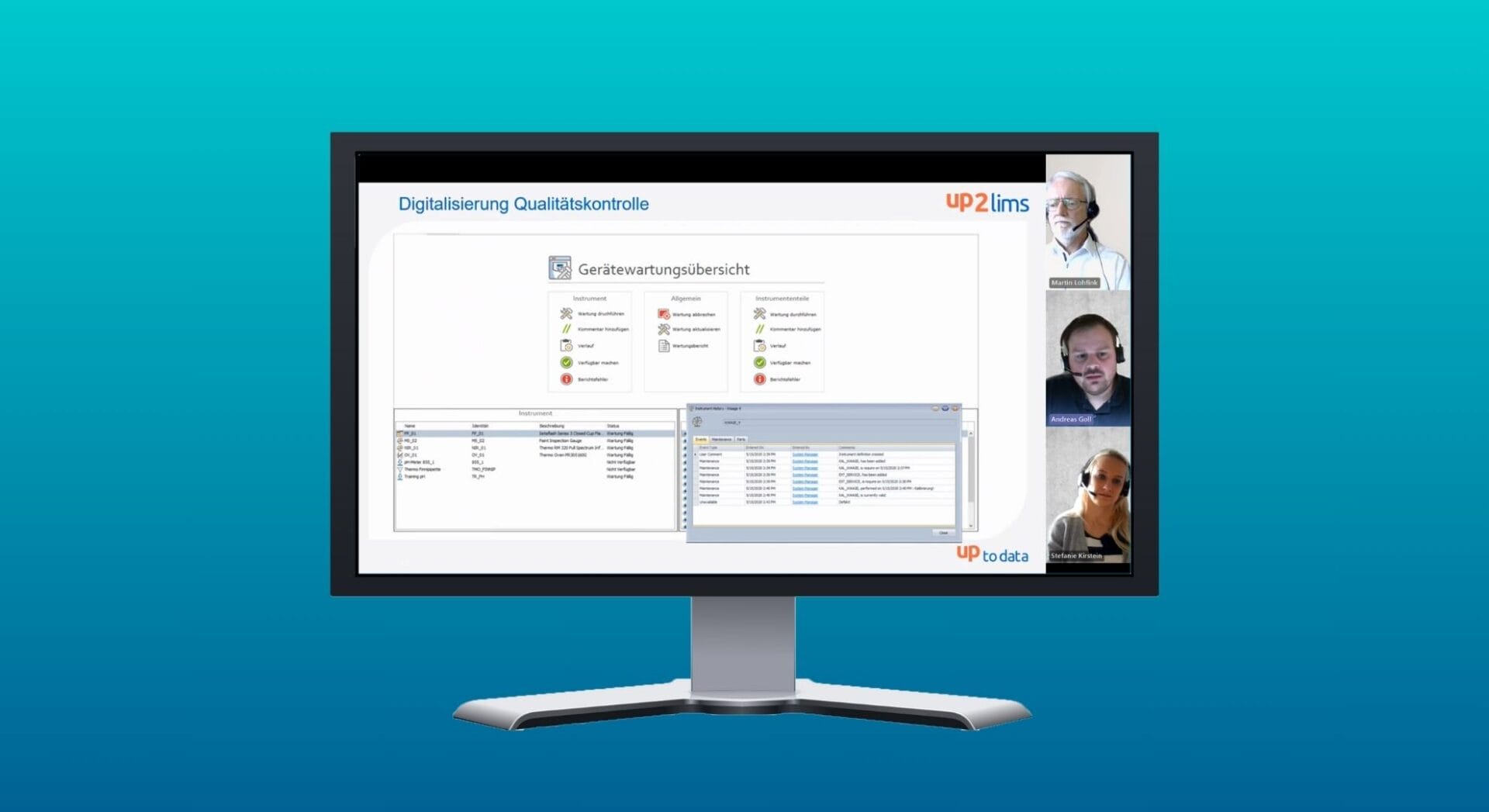
Video tutorial: The role of a LIMS in quality control
In our video tutorial, we show how a LIMS can contribute to maximum product quality and compliance. The video is exclusively available.
Manufacturing companies face a double challenge: on one hand, economic pressure is increasing due to international competition; on the other, customers and supervisory authorities demand the highest quality standards and complete traceability.
The problem: Fragmented systems hamper efficiency and security
Many companies still have separate IT systems and manual interfaces between the laboratory, production, and quality assurance. This results in redundant entries, media disruptions, and a high coordination effort – with negative effects on speed, transparency, and data quality.
The solution: LIMS as an integrative platform
A LIMS (laboratory information management system) creates a central database that seamlessly links laboratory, production, and quality processes. It integrates analysis devices, ERP systems, and other digital processes into automated workflows and ensures consistent data storage and seamless traceability – from goods receipt to final batch release.
The main advantages at a glance:
- Reduction of manual entries and sources of error through automated processes.
- Real-time data for quick reactions to deviations.
- Centralized data storage to support audits and complaint management.
- Complete traceability for compliance with regulatory requirements.
Compliance becomes an integral part
A LIMS creates the necessary basis for audit-proof processes, particularly in highly regulated industries such as pharmaceuticals or medical technology. Audit trails, electronic signatures, and documented change histories are mapped automatically – thus significantly reducing the workload of the specialist departments.
The perspective: From digitalized processes to intelligent laboratory automation
Introducing a LIMS is more than a digitalization step: it also lays the groundwork for future innovations. Whether machine learning for trend analysis, robotics for routine processes, or augmented reality for a new form of laboratory interaction, modern LIMS solutions open up potential for greater efficiency, quality, and future-proofing.
Conclusion: time for the next step
Digitalizing quality control is a business-critical necessity. Companies that continue to rely on isolated systems and manual processes not only lose valuable time, but also risk compliance violations and quality problems.
A modern LIMS acts as a central catalyst, turning fragmented workflows into an efficient, end-to-end process. The investment pays off through lower error rates, faster approvals, and automated compliance documentation.
However, the key to success is the right implementation strategy. Learn how to master this transformation and the specific steps you need to take in our detailed coffee talk.
Start your LIMS journey now – the complete recording shows you the way to optimized quality control.